


A New Perspective on Neurodiversity: Understanding Differences Without Judgment Jodi Carlton, MEd, LLC Jodi Carlton, MEd

Neurodiverse Relationship Expert
Jodi Carlton, MEd
April 13, 2025
Why It’s Time to Challenge the Way We Think About Neurodivergence
For generations, society has misunderstood what it means to be neurodivergent. Individuals whose brains function differently from the majority—such as those with autism, ADHD, or dyslexia—have often been labeled as “disordered,” “broken,” or “deficient.” This deficit-based perspective has been shaped by a rigid medical model focused on pathology and treatment. But this outdated viewpoint is not only incorrect—it’s harmful.
A growing movement is now challenging this paradigm. At the heart of this neurodiversity paradigm shift is the idea that neurological differences are natural, not pathological. This shift reframes how we view autism, ADHD, dyslexia, and other neurotypes—from something that needs fixing to something that needs understanding.
At the center of this evolving conversation is the concept of neurodiversity, a term introduced by sociologist Judy Singer in the 1990s. Singer likened the diversity of human cognition to biodiversity in nature, framing neurological differences as natural variations rather than medical flaws.
This concept doesn’t deny the challenges neurodivergent individuals face—especially in a world that caters to neurotypical norms. But it shifts the focus from what’s “wrong” to what’s different. It also invites a more balanced conversation about both the difficulties and the strengths that come with being neurodivergent.
A Simple Analogy That Changes Everything
Think about physical traits like height. Most people fall within an average range, but others are significantly taller or shorter. We don’t label someone who is 6’5” or 4’11” as “disordered”—we understand that they may need different accommodations (like more legroom or a step stool), but we don’t assume something is wrong with them.
My own mother is 4’11”, and she keeps stools around the house to reach things. It’s just how she navigates the world. No one has ever suggested she needs to be “fixed.”
Now, imagine applying that same logic to the brain.
Neurodivergent individuals experience, interpret, and interact with the world differently than neurotypical individuals. Their differences are largely invisible, which is one reason they’ve been misunderstood for so long. Society has seen their struggles as personal failings and as something that is “wrong” with them.
But what if we saw those differences the way we see height? What if we viewed them as natural variations that require accommodations, not corrections? Similar to my mom’s step-stool that assists her in reaching the top shelf, neurodivergent brains may benefit from supports such as more time to process information, visual reminders or cues, reduced sensory input, flexible scheduling, written instructions alongside verbal ones, and environments that allow for movement or breaks when needed.
Reframing Language in the Neurodiversity Paradigm Shift
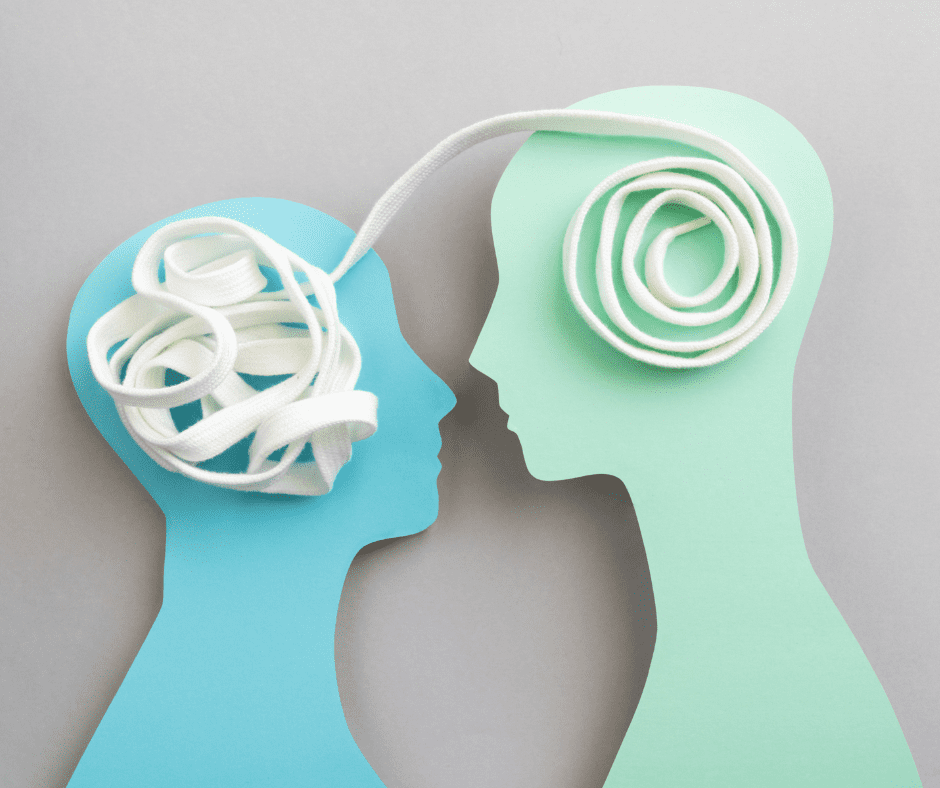
One of the most persistent obstacles to embracing neurodiversity is the language we use. Terms like autism spectrum disorder or attention-deficit/hyperactivity disorder still center the conversation on what’s perceived as dysfunctional. This reinforces the misconception that neurodivergence is a defect to be fixed rather than a difference to be valued and understood. A major flaw in this perspective is its narrow focus on the challenges associated with neurodivergence, while overlooking the remarkable strengths, talents, and cognitive diversity that often accompany it. Many of the world’s most innovative thinkers, artists, musicians, and pioneers in technology and literature have been neurodivergent—our greatest advancements are frequently born from the very minds this mindset seeks to “correct.”
Yet, much of our healthcare, education, and workplace systems remain stuck in this medicalized framework. Children and adults are often required to get a “diagnosis” to receive support in school or accommodations at work.
As a result, many neurodivergent individuals live with unnecessary societal demands and shame, constantly trying to “mask” their true selves in order to fit into societal molds. The emotional toll of masking can be immense—impacting mental health, self-worth, and relationships.
To truly move forward, we must begin reframing neurodivergence not as a disorder but as a neurotype—a naturally occurring variation in how the brain processes information. This isn’t just semantics. It’s a powerful reorientation that affects how we educate children, support relationships, and build inclusive workplaces.
This is the foundation of the neurodiversity paradigm shift: a move away from pathology and toward acceptance, understanding, and connection.
The Science Behind Neurodivergence: Genetics & the Neurodiversity Paradigm
Research backs up what many of us working in this field already know: neurodivergence is biologically rooted. For example, studies show that autism has a strong genetic basis, with twin studies estimating heritability between 64% and 91%. ADHD, too, has been linked to specific genetic variants.
These findings make it clear that neurodivergent traits are not imagined or behavioral choices—they are innate differences in brain wiring. When we treat them as such, we can move from judgment to understanding and, ultimately, to effective support when beneficial and needed.
A Personal Journey That Sparked a Mission
My passion for this work isn’t just professional—it’s deeply personal.
When my daughter was a baby, she was identified with developmental delays, particularly in sensory processing and language. She struggled to eat, to tolerate touch, and to communicate. I had never heard the term sensory processing until her occupational therapist explained that my daughter’s brain reacted very differently to certain stimuli.
I’ll never forget when I started to place her on the grass, and she splayed her limbs in protest like a cat being put into water. On another day, I saw her happily crawling on our driveway with bloodied knees—completely unbothered. Her sensory thresholds were vastly different from texture to texture.
Despite years of occupational therapy and speech therapy, no one ever mentioned autism. It wasn’t until a reading specialist casually suggested PDD-NOS—a now-retired term once used to classify mild (level 1) autism—that I even considered it. I decided to attend a national autism conference, and as the presenter described common traits like stimming and sensory sensitivity, it was as if they were describing my daughter. Later that year, she was assessed and diagnosed as autistic.
That moment changed everything, not just for my daughter but for me. I became a student of neurodiversity—first as a mother, then as a therapist, and now as a coach, advocate, and educator.
Neurodivergence Touches Us All
Whether or not we realize it, neurodivergence impacts everyone. Maybe your child has trouble regulating emotions, your spouse thinks differently than you do, or your coworker communicates in a way that seems “off.” These aren’t just quirks—they may be signs of different neurotypes.
The more we learn to recognize, understand, and embrace these differences without judgment, the more connected and inclusive our communities can become.
The Bottom Line: Embrace the Shift
We are still in the early stages of a neurodiversity paradigm shift—one that moves us away from deficit-based thinking and toward a more inclusive understanding of human variation.
Recognizing neurodiversity means doing more than acknowledging that people are different. It means embracing those differences. It means shifting our language, our systems, and our expectations. It means valuing the whole person, not just the traits that fit neatly within societal norms.
It’s time we stop asking how to “fix” neurodivergent individuals and start asking how we can all thrive together regardless of our brain wiring.
Because when we understand neurodiversity without judgment, we unlock the full potential of our humanity.
The post A New Perspective on Neurodiversity: Understanding Differences Without Judgment first appeared on Jodi Carlton, MEd, LLC.